In short
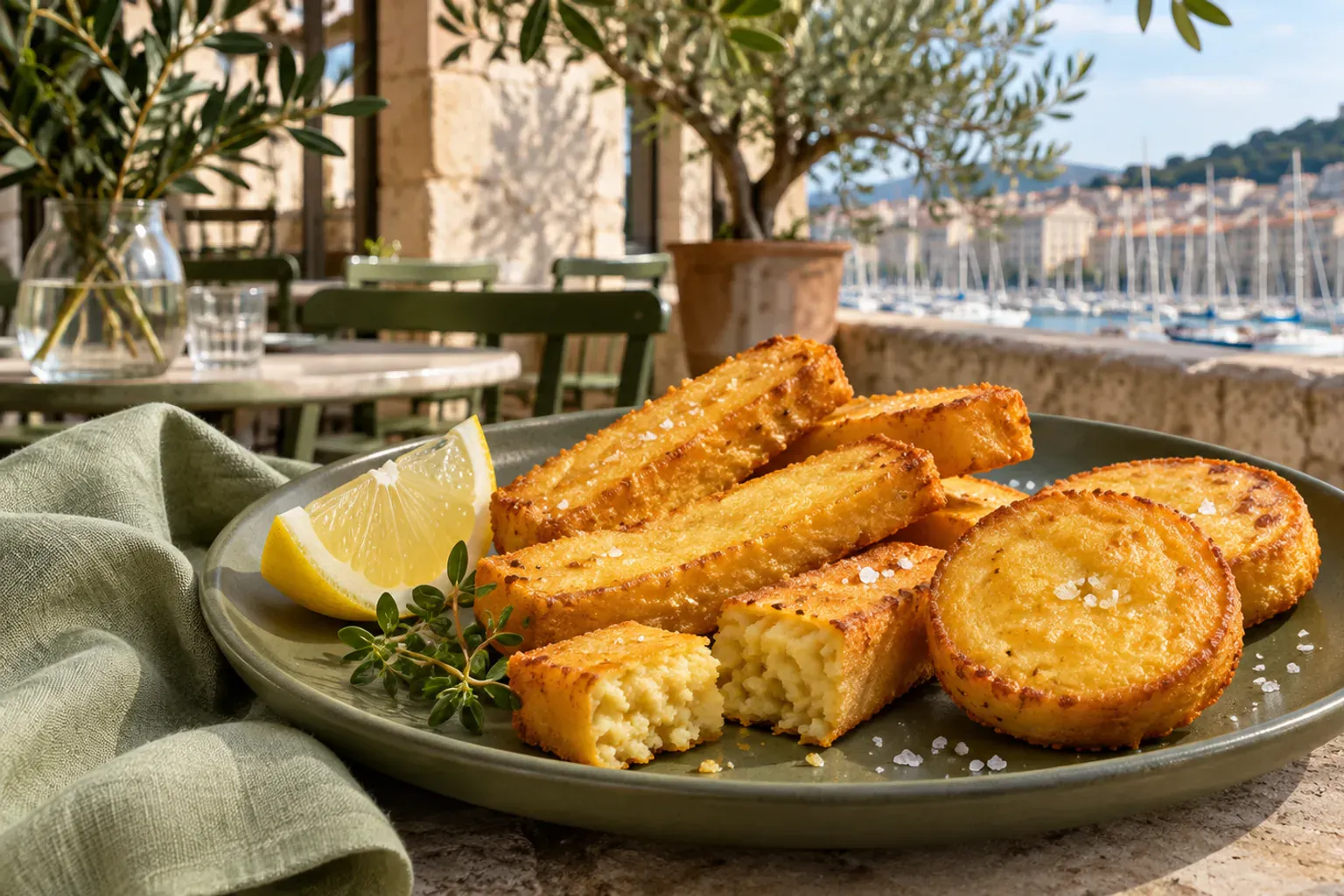
Panisse is a chickpea-flour, water, olive-oil and salt batter, cooked in a pan, set, cut into sticks and fried until golden outside and soft inside. It descends from Ligurian panissa and became the speciality of L’Estaque. It is not chichi frégi (a sweet doughnut) nor socca (an oven-baked pancake). Serve it hot with salt, pepper or aïoli, alongside pastis or rosé. It is naturally gluten-free.
Golden chickpea sticks, crisp outside and creamy inside: panisse is the taste of the Marseille aperitif.
This guide covers its origins, the recipe, how to serve it and where to try it.
What is panisse? A simple definition
A chickpea-flour batter cooked until thick, left to set, then cut and fried.
Ingredients: chickpea flour, water, olive oil, salt
Four ingredients, no egg, no milk, no yeast.
- 01Chickpea flour
Fine and fresh, for flavour.
- 02Water
Cold, to avoid lumps.
Panisse, socca, chichi frégi, Ligurian panizza: the differences
Same chickpea, different methods.
| Speciality | Place | Base | Cooking | Taste |
|---|---|---|---|---|
| Panisse | Marseille | Chickpea, water, oil, salt | Set, then fried | Crisp, soft, savoury |
| Socca | Nice | Chickpea, water, oil, salt | Baked thin | Thin pancake |
Socca is baked liquid; panisse is set then fried; chichi is a sweet doughnut.

The history of panisse in Marseille
Panisse came along the coast from Liguria.
Ligurian origins and Italian immigration
Italian immigrants brought panissa to Marseille in the late 19th and early 20th centuries.
L’Estaque, home of the panissières
The former fishing village made panisse its speciality.
From street food to bistro counters
Panisse moved from paper cones to aperitif plates.
Exact dates vary across sources.
See also our article on Mediterranean and Provençal cuisine in Marseille.
Traditional panisse recipe, step by step
Make the batter the day before.
A panisse is won in the pan.
- 01Batter
Proportions and cooking the batter
250 g chickpea flour, 1 litre water, 2 tbsp olive oil, salt; stir until it pulls away from the pan.
- 02Moulding
Saucers, dish or sticks
Pour into oiled saucers or a dish, chill overnight, cut.
- 03Cooking
Frying or oven
Fry at about 180 °C, or bake at 220 °C for a lighter result.
6 mistakes that ruin panisse
The usual pitfalls.
Cook until it leaves the pan.
The panisse turns greasy.
Storing, freezing and reheating panisse
Keep the set batter 2–3 days in the fridge; freeze cut sticks before frying.
Add cumin or herbs to the batter for a twist.
How to serve panisse: the Marseille aperitif ritual
Eaten hot, with your fingers, on a terrace.
Salt, pepper, lemon… or aïoli
Salt and pepper, a dash of lemon, or garlicky aïoli.

What to drink with it
- 01Pastis
The historic pairing.
- 02Provence rosé
Dry and fresh.
Other aperitif classics
Tapenade, anchoïade and poutargue.
Our itinerary what to do at the Old Port of Marseille ends at aperitif time.
Spotting a good panisse in a restaurant
Four criteria.
Homemade
Irregular shape, real chickpea taste.
Crisp and soft
Golden crust, creamy core.
A menu that treats panisse as a speciality is a good sign.
Where to try panisse in Marseille
L’Estaque is the classic pilgrimage; many Old Port bars serve it too. See our guide where to eat at the Old Port of Marseille.

And at our place
Homemade panisses with aïoli, on the terrace facing the Old Port.
They are among the starters on our menu. Address and access on our page restaurant on the Old Port of Marseille.
Frequently asked questions about panisse
Is panisse gluten-free?
Yes by recipe; check shared frying oil.
Can you freeze panisse?
Yes, cut and unfried.
Panisse or panisses?
Usually plural; the gender varies locally.
Panisse vs chichi frégi?
Panisse is savoury; chichi is a sweet doughnut.
Oven or air fryer?
Yes, lighter and drier than frying.
Where does the word come from?
From Provençal and Ligurian panissa.
Read also
Further reading
Want to try our panisses by the boats? Visit our restaurant vieux port marseille page.